Why Are Mortgage Rates Still Rising as Inflation Cools?

Why Are Mortgage Rates Still Rising as Inflation Cools?
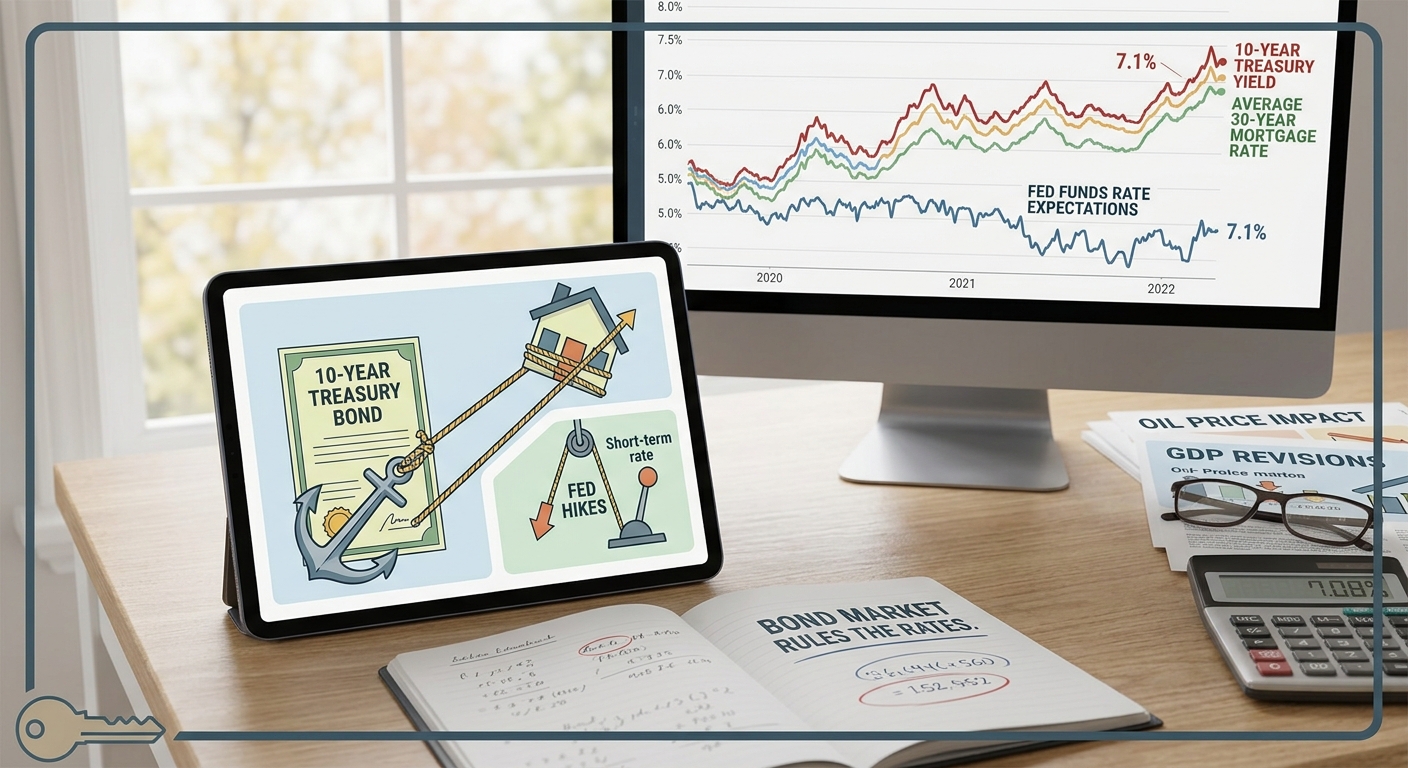
If you've been watching mortgage rates expecting good inflation news to bring them down, this week is a confusing one. The Fed's preferred inflation gauge came in cooler than expected for August, and the odds of another Fed rate hike this year dropped sharply, yet mortgage rates have actually been climbing, with the average 30-year fixed rate near 7.08% and most mortgage professionals surveyed expecting it to go higher still. The short answer is that your mortgage rate doesn't take its cues directly from the Fed. It tracks the bond market, and the bond market has been reacting to a different set of pressures entirely.
What Did the Latest Inflation Data Actually Show?
The Fed's preferred inflation gauge, the personal consumption expenditures (PCE) price index, rose 0.3% for August and 3.4% over the past year, below the 3.7% economists had expected. Core PCE, which strips out volatile food and energy prices, also rose 0.3% for the month and held at 3% year-over-year, below its own forecast too. Both numbers are still well above the Fed's 2% target, but the fact that they came in softer than expected is what moved markets. Separately, the Commerce Department revised its Q2 GDP estimate sharply higher, to 2.2% growth from an original estimate of 1.5%, and consumer spending rose 0.9% in August even as a Conference Board survey showed consumer confidence near a 12-year low. In short, inflation is easing a little faster than feared, but the economy underneath it is running hotter than first thought.
Why Didn't Mortgage Rates Drop on That News?
This is the part that trips a lot of buyers up. The Fed's benchmark rate most directly affects short-term borrowing, credit cards, HELOCs, auto loans, while 30-year mortgage rates track much more closely with the 10-year Treasury yield. That yield has been climbing for reasons mostly separate from this week's inflation report: rising oil prices tied to geopolitical tension, tariff pressure, and the stronger-than-expected growth data all push long-term yields up, because they suggest the economy, and inflation, may run hotter for longer even as the headline monthly numbers improve. The 10-year yield touched a 24-year high this week, and mortgage rates moved with it, even on a day when the inflation print itself was good news.
What's Happening With the Fed's Next Move?
The Fed raised its benchmark rate to a range of 3.75% to 4.00% last month, its first increase in three years. Odds of a second hike at the Fed's late-October meeting swung hard this week: futures markets had priced in roughly a 70% chance of another hike just days earlier, and that fell into the low-to-mid 40% range after New York Fed President John Williams said there was "no urgency" for another increase, then fell further still after this week's inflation and GDP data. That's a meaningfully lower probability than a week ago, but it's not the same thing as mortgage rates coming down. A less likely Fed hike eases pressure on short-term rates; it doesn't automatically pull the 10-year Treasury, and your mortgage quote, down with it.
What This Means If You're House Hunting Right Now
Two things are true at once, and both matter for your decision-making. First, don't assume a cooler inflation headline means your mortgage rate is about to drop, this week is a direct example of the opposite happening. Second, don't assume a gloomy consumer-confidence number means it's a bad time to buy, spending actually rose in the same report. Headlines move fast in both directions; your actual numbers, what you qualify for, what a given rate does to your payment, and what's available in your target market, are what should drive your timeline, not any single week's data release.
If you're actively shopping, this is also a good moment to ask your loan officer about a rate lock with a float-down option, since it lets you lock in protection against further increases while still capturing a potential rate drop if the bond market reverses before closing.
Frequently Asked Questions
Does a Fed rate hike directly raise my mortgage rate? Not directly. The Fed's rate most directly affects short-term borrowing costs. Your 30-year mortgage rate tracks the 10-year Treasury yield more closely, which moves on its own set of expectations about growth, inflation, and risk.
If inflation is cooling, why would mortgage rates keep rising? Because other forces, oil prices, tariffs, and stronger-than-expected growth data in this case, can push the bond market's long-term yields up independent of a single month's inflation report.
Should I wait for rates to drop before buying? That's not something this data can promise. Rates have been volatile in both directions recently, including rising on what was technically good inflation news. Waiting on a prediction is riskier than deciding based on your own budget and timeline.
When is the Fed's next rate decision? The Fed's next scheduled meeting is October 27 to 28, 2026. Markets are currently pricing in roughly even odds, or somewhat lower, of another rate increase, but that can and has shifted quickly.
Bottom Line
The relationship between "good" inflation news and your actual mortgage rate is looser than most headlines suggest. This week's data cooled inflation expectations and lowered the odds of another Fed hike, and mortgage rates still went up anyway, because the bond market is weighing oil prices, tariffs, and surprisingly strong growth more heavily right now. If you're waiting for a clean signal to time your purchase, this week is proof that one may not come. Talk with a Tried & True Home Loans loan officer about rate-lock options for your situation, or connect with a Rise Realty agent to keep your search moving regardless of which way this week's headlines point.
Sources
- U.S. Bureau of Economic Analysis, August 2026 PCE Price Index and Q2 2026 GDP revision
- Morning Brew, economic data recap
- Bankrate, mortgage rate trends and expert rate poll
- The Motley Fool, coverage of August PCE data and Fed rate-hike odds
- CME Group FedWatch Tool, implied Fed rate-hike probabilities
Recent Posts